We don’t.
That isn’t because we don’t screen prospective homes. Quite the opposite. We take placement extremely seriously. We simply don’t believe that a questionnaire tells us everything we need to know.
Anyone can check the right boxes.
Indoor only? Check.
Veterinary care? Check.
Never declaw? Check.
Financially prepared for a cat? Check.
Those things matter, and we certainly ask about them. But they tell us whether a household meets some basic requirements. They don’t answer the much more important question:
Should one of our cats live there?
That takes a conversation.
We are matching cats to people, not processing applications
Oriental Shorthairs are unusually interactive animals. They are intelligent, intrusive, affectionate, demanding, ridiculous little creatures that tend to regard human privacy as an unfortunate misunderstanding.
Someone looking for a decorative cat who will quietly occupy the other end of the sofa may find an Oriental rather alarming.
Someone who wants a cat following them into the bathroom, commenting on dinner, participating in Zoom meetings and objecting to closed doors may have found their breed.
So when we talk to a prospective family, we want to know what they actually want from the relationship.
We also want to know about the animals already in the household. What are their personalities? How have they responded to other cats? What does daily life look like? Who is home? What happens when people travel? If there are children, what is their relationship with animals?
There usually isn’t one correct answer. We’re trying to understand the household well enough to imagine one of our cats living in it.
Children tell you quite a lot. Cats tell you more.
I started showing cats in CFA when I was ten years old. Long before that, according to family history, my parents’ Siamese kitten was climbing into my crib.
Cats have therefore been part of my life for essentially as long as I have memories.
I don’t expect that from someone else’s child.
I don’t expect an eight- or eleven-year-old to behave like a professional handler. I don’t require children to sit silently with their hands folded while a cat graciously grants them an audience.
They’re kids.
What I want to see is whether they understand animals.
Do they approach a cat or pursue it?
If the cat moves away, do they understand what just happened?
Can they change what they’re doing in response?
Do they remain interested after the first few minutes, when the exciting new animal has ceased being entirely new?
Can they simply sit with a cat?
And then I watch the other participant in this little experiment.
The cat.
Does the cat stay? Relax? Come back? Initiate another interaction? Ask for attention?
Or is the cat spending its time trying to create distance?
A child can tell me all afternoon that they love cats. The cat gets a vote too.
Sometimes nothing is “wrong”
This is probably the hardest part of breeder screening to explain.
Sometimes I meet perfectly pleasant people and decide that I’m not going to sell them a kitten.
There may be no dramatic event. Nobody has announced plans to let the kitten wander the neighborhood or feed it nothing but Cheetos. There may be no single answer on which I can put a red circle and write NO.
The interaction simply doesn’t work for me.
After decades with cats, much of what I’m doing is pattern recognition. I have watched an enormous number of cats interact with an enormous number of people. Eventually you notice things without consciously assembling a checklist first.
That judgment is not infallible. Human judgment never is.
But ignoring it would make the screening process rather pointless.
If something about a prospective placement leaves me uncomfortable, I don’t need to persuade myself to make the sale anyway.
There will be another home.
The opposite happens too
Then there are conversations that run an hour without anyone noticing.
Someone tells me they want a playful, talkative, mischievous Velcro cat, and I realize that they aren’t merely attracted to the extraordinary appearance of an Oriental. They have figured out what living with one actually means—and that is precisely what they want.
A child writes to me about coming home from school and immediately looking for her cat. She talks about playing with cats and talking to them. I learn that she went to a CFA show and someone let her help groom and show a Persian.
Now I’m learning something useful.
Not because she used the magic words “I love cats.” Almost everyone who contacts us loves cats.
She described a relationship.
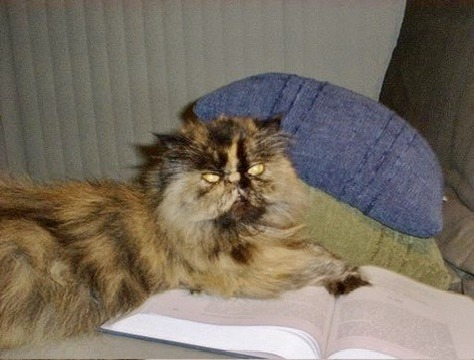
That particular story struck close to home. I once owned a Persian named Kittystone’s Starry Night. She was intended to be a show cat and wasn't particularly successful at it. Instead, she became my companion for almost eighteen years.
She went to college with me. She went to law school with me.
I would trade every ribbon she might have won for that.
I still miss her.
So when I encounter a young person who seems genuinely interested in cats—and perhaps interested in showing them—I pay attention. CFA gave me something enormously important when I was that age. If another kid catches the same bug, I am happy to encourage it.
We’ve helped several new exhibitors through their first shows, and we'll undoubtedly do it again.
A successful interview isn't a promise of a kitten
Being comfortable with a family gets us to the next question: Which cat?
That distinction is important.
We raise these kittens from birth. By the time they are ready to leave, we know quite a bit about them. One may be fearless and insist upon participating in everything. Another may be enormously affectionate but prefer a quieter environment. One may desperately want another cat as a wrestling partner. Another may attach itself primarily to people.
The family that would be perfect for one isn't necessarily perfect for another.
This is also why we don't take reservations on newborn kittens. At that age, neither you nor we know enough about who that kitten is going to become.
We would rather disappoint someone temporarily than make a fifteen-year mistake.
The asymmetry matters
There is a simple principle underneath all of this.
Suppose I turn down a wonderful prospective owner because I misread the situation.
That would be unfortunate. But that person will find another breeder and another wonderful cat.
Now suppose I have serious reservations, ignore them because I cannot prove anything is wrong, and send a kitten into a home that turns out to be a poor match.
The kitten lives with my mistake.
Those risks aren't equivalent.
So our placement standard is deliberately conservative. We ask questions. We talk. When practical, we watch people interact with cats. We listen to what prospective owners tell us—and we watch what the cats tell us.
Sometimes the answer is yes.
Sometimes it is no.
And sometimes it is: I like these people very much. Now let's figure out which kitten likes them too.
That is the point at which placement really begins.
I don't need a reason to prove that someone shouldn't have a cat. I need enough confidence to decide that one of my cats should have them.